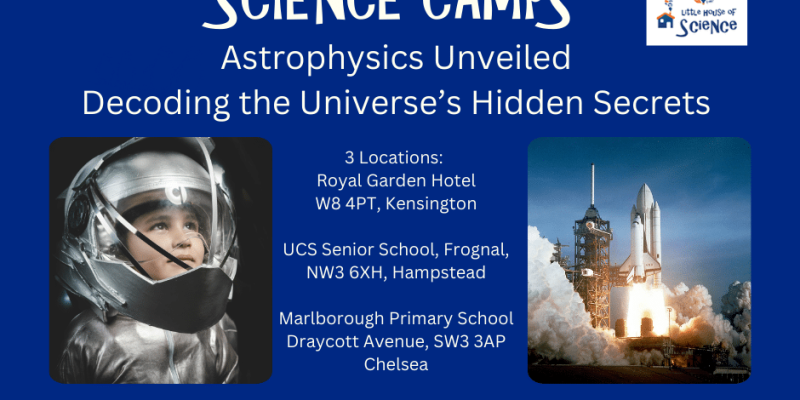
Decoding the Universe’s Secrets: Mystery Science Unveiled
Introduction
Ever looked up at the night sky and felt a sense of wonder, a nagging curiosity about what’s *really* out there? You’re not alone. For millennia, humans have gazed at the cosmos, trying to decipher the universe’s intricate secrets. But “mystery science,” as we’ll call it, isn’t just about astronomy. It’s the quest to understand the unknown, the fundamental forces that shape our reality, from the tiniest subatomic particles to the largest galactic structures.
This isn’t some dusty academic exercise, either. Unraveling these mysteries has profound implications for our future, shaping everything from the technologies we use to the very way we understand our place in the universe. So, let’s dive in and explore how we’re decoding the universe’s secrets and what it all means for us.
The Allure of the Unknown: Why Bother with Mystery Science?
You might be thinking, “Sure, understanding black holes sounds cool, but how does it affect my daily life?” The truth is, mystery science has both short-term and long-term impacts, many of which are surprisingly tangible.
Short-Term Impacts:
- Technological Advancement:Much of the technology we take for granted today is a direct result of fundamental scientific research. For example, the development of the internet itself sprung from research done at CERN, the European Organization for Nuclear Research, aimed at facilitating collaboration among physicists. Quantum mechanics, a cornerstone of modern physics, has led to breakthroughs in lasers, transistors, and medical imaging, all of which have revolutionized various industries.
- Economic Growth:Scientific breakthroughs often fuel innovation and create new industries. The burgeoning fields of renewable energy, driven by the need to understand and harness natural forces, are a prime example. Investment in research and development not only advances our understanding of the universe but also creates jobs and stimulates economic growth.
- Medical Breakthroughs:Understanding the fundamental processes of life, from the structure of DNA to the workings of the immune system, is crucial for developing new treatments for diseases. Advances in genomics, proteomics, and other areas of biology are paving the way for personalized medicine and targeted therapies that could revolutionize healthcare.
Long-Term Impacts:
- Existential Understanding:Perhaps the most profound impact of mystery science is the way it shapes our understanding of ourselves and our place in the universe. Exploring the origins of the cosmos, the nature of consciousness, and the possibility of extraterrestrial life challenges our assumptions and expands our horizons.
- Resource Management:As we face increasing environmental challenges, a deeper understanding of Earth’s systems, climate change, and the availability of resources becomes essential for sustainable living. Mystery science can help us develop innovative solutions for mitigating climate change, conserving biodiversity, and managing resources more efficiently.
- Future Exploration:Unlocking the secrets of space travel, such as developing efficient propulsion systems and understanding the effects of long-duration spaceflight on the human body, is crucial for expanding our reach beyond Earth. This could lead to the discovery of new resources, the colonization of other planets, and the ultimate survival of our species.
Decoding the Mysteries: Practical Solutions and Approaches
So, how do we go about unraveling these mysteries? The answer lies in a combination of cutting-edge research, technological innovation, and a collaborative spirit. Here are some practical solutions and approaches:
- Investing in Fundamental Research:The foundation of all scientific progress is fundamental research, which aims to expand our understanding of the basic principles of nature. This type of research may not always have immediate applications, but it often leads to unexpected breakthroughs that transform our world.
- Example:The discovery of the Higgs boson at CERN in 2012 confirmed a key prediction of the Standard Model of particle physics, providing a deeper understanding of the fundamental forces that govern the universe. While the Higgs boson itself may not have immediate practical applications, the technologies developed for the experiment, such as advanced detectors and computing systems, have found applications in medicine, materials science, and other fields.
- Fostering Collaboration:Scientific discovery is rarely a solitary endeavor. Collaboration among researchers from different disciplines and institutions is essential for tackling complex problems and sharing knowledge.
- Example:The Event Horizon Telescope (EHT), which captured the first-ever image of a black hole in 2019, was a global collaboration involving hundreds of scientists and engineers from around the world. By combining data from multiple telescopes located across the globe, the EHT was able to achieve an unprecedented level of resolution, allowing them to “see” the shadow of a black hole.
- Developing New Technologies:Many of the most exciting discoveries in mystery science are made possible by new technologies that allow us to probe the universe in new ways.
- Example:The James Webb Space Telescope (JWST), launched in 2021, is the most powerful telescope ever built. Its advanced infrared capabilities allow it to see through dust clouds and observe the earliest galaxies in the universe, providing insights into the formation and evolution of galaxies.
- Promoting Science Education:Inspiring the next generation of scientists and engineers is crucial for ensuring that we continue to make progress in understanding the universe. We need to foster a love of science in young people and provide them with the skills and knowledge they need to pursue careers in STEM fields.
- Example:Initiatives like science fairs, coding camps, and outreach programs can help to spark an interest in science and technology in young people. Providing access to high-quality science education for all students, regardless of their background, is essential for ensuring that we have a diverse and talented workforce that can tackle the challenges of the future.
- Embracing Open Science:Sharing data, code, and research results openly and transparently can accelerate the pace of scientific discovery and promote collaboration. Open science also allows the public to engage with science and hold researchers accountable.
- Example:Initiatives like the Open Science Framework (OSF) provide platforms for researchers to share their data, code, and research protocols openly and transparently. This allows other researchers to build upon their work, replicate their findings, and identify potential errors or biases.
Alternative Approaches: Finding the Right Fit
Not every solution is a one-size-fits-all. Here are alternative approaches to consider:
- Citizen Science:Engage the public in scientific research by inviting them to collect data, analyze images, or classify objects. This can help to accelerate the pace of discovery and foster a deeper appreciation for science.
- Private Sector Involvement:Encourage private companies to invest in research and development in areas of mystery science that align with their business interests. This can help to accelerate the development of new technologies and bring them to market more quickly.
- International Cooperation:Work with other countries to share resources, expertise, and infrastructure for scientific research. This can help to reduce costs, avoid duplication of effort, and promote collaboration on a global scale.
Conclusion: A Universe of Possibilities
Decoding the universe’s secrets is not just a scientific endeavor; it’s a human one. It’s about our innate desire to understand the world around us, to push the boundaries of knowledge, and to create a better future for ourselves and generations to come. The short-term and long-term impacts are undeniable, ranging from technological leaps and economic growth to profound existential insights and sustainable resource management.
While the challenges are significant, the potential rewards are even greater. By investing in fundamental research, fostering collaboration, developing new technologies, promoting science education, and embracing open science, we can unlock the secrets of the universe and create a world of possibilities.
So, let’s embrace the spirit of inquiry, the thrill of discovery, and the power of human ingenuity. The universe is waiting to be explored. Let’s decode its secrets together. The future is not something to be feared but something to be shaped, understood, and embraced with open minds and hopeful hearts. It’s a future where mysteries become solutions, and the unknown becomes a stepping stone to something extraordinary. Are you ready to embark on this journey?